The pieces every new homeowner actually needs
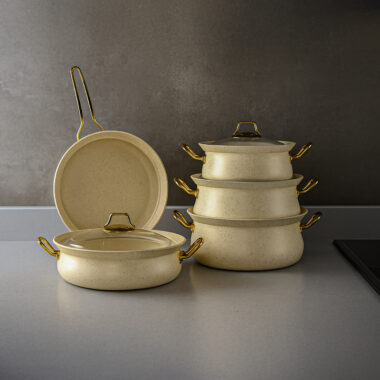
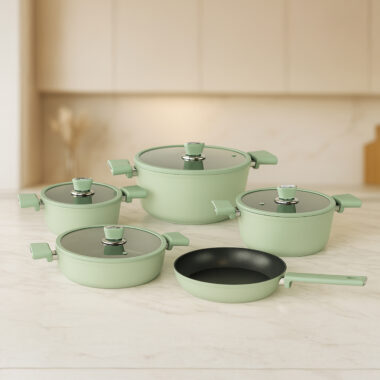
When you move into a new home, it is tempting to grab the biggest cookware set you can find. But the truth is, most everyday meals only require a handful of well-chosen pieces. A good non-stick frying pan around 24 cm handles your eggs, pancakes, and quick sautes. A larger stainless steel or granite pan takes care of searing and stir fries. Add a saucepan with a lid for soups and sauces, a casserole pot for curries and stews, and a stockpot for pasta and batch cooking — and you have everything you need to cook almost anything.
Which material should you choose?
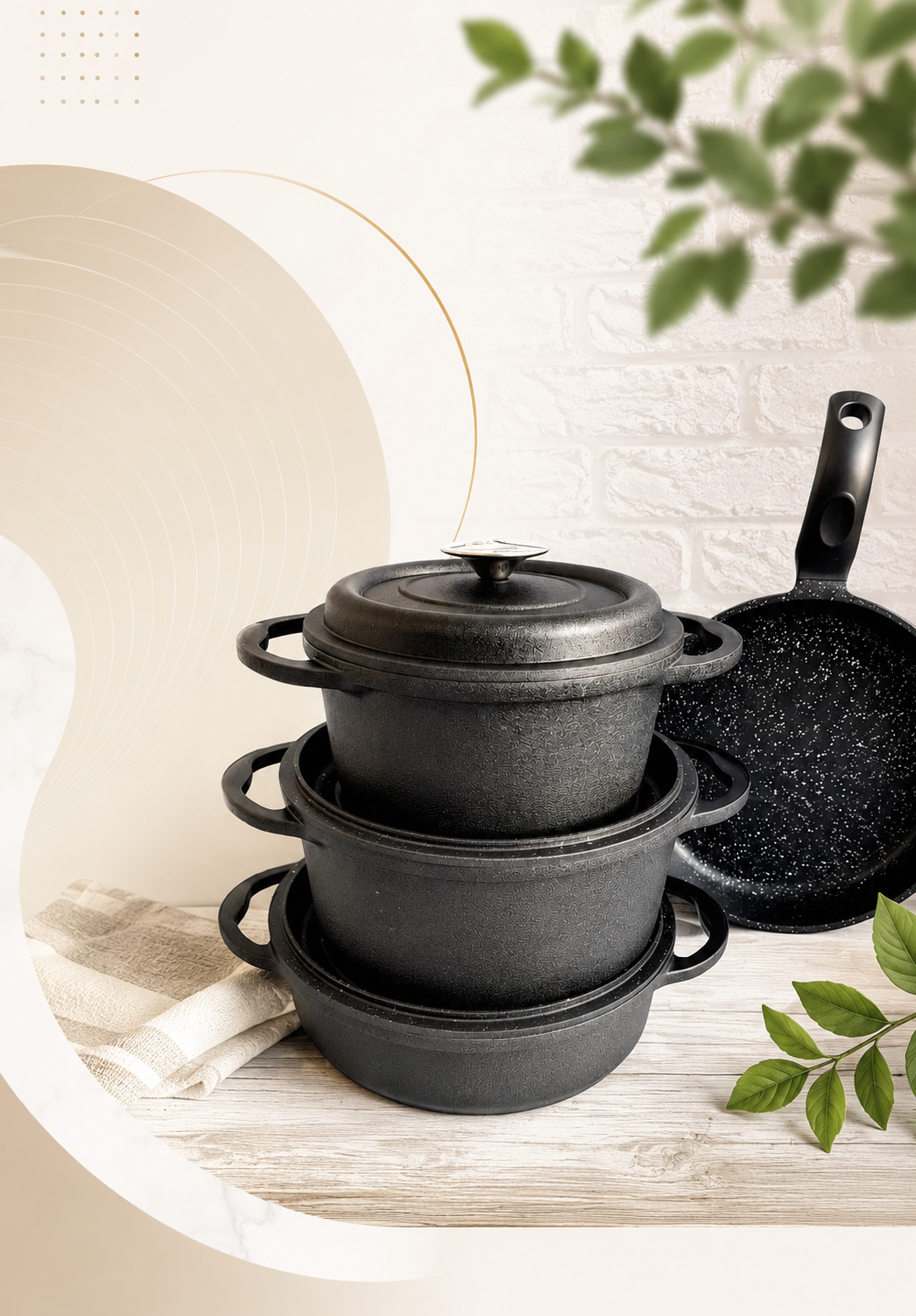
Cookware material is the single biggest factor in how your pans perform. Non-stick pans — including granite-coated options — are the easiest to use and clean, making them ideal for beginners. Food slides off with minimal oil, and washing up takes seconds. The trade-off is that they need a little care: avoid metal utensils and very high heat to keep the coating in good condition.
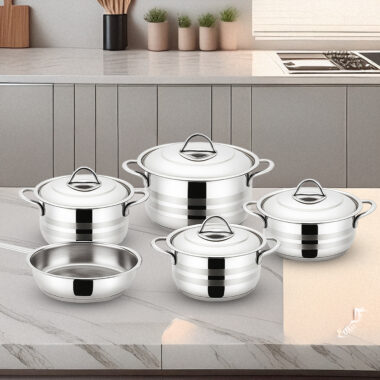
Stainless steel is the professional kitchen standard. It handles high heat beautifully, does not react with acidic foods, and can last decades with proper care. There is a small learning curve — you need to preheat the pan properly to prevent sticking — but once you get the hang of it, stainless steel is incredibly versatile. For most new homeowners, the ideal setup is a non-stick pan for everyday cooking paired with a stainless steel pan for when you need more heat.
Always check your hob type before buying
This is the step most people skip — and then regret when they get home. Not all cookware works on all hobs. Gas hobs are the most forgiving and work with almost everything. Electric and ceramic hobs work fine with any flat-based pan. Induction hobs, however, only work with magnetic cookware — if a magnet does not stick to the base of the pan, it will not heat up on an induction hob.
A little care goes a long way
Even the best cookware will wear out quickly if it is not looked after properly. The most important habit is to let your pans cool down before washing them — putting a hot pan under cold water causes the base to warp over time. For non-stick pans, always use wooden or silicone utensils rather than metal, and hand wash them even if the label says dishwasher-safe. When storing, place a soft cloth or pan protector between stacked pans to prevent the surfaces from scratching each other. These small habits can easily double the lifespan of a good cookware set.
Ready to find your perfect set?
Browse our full cookware range — from granite-coated non-stick to professional stainless steel, every set is chosen for real home kitchens and built to last.